The Ultimate Guide to Tote Bag Manufacturing: An In-Depth Analysis of Microfiber, PU Fabrics, Hardware, and Stitching Craftsmanship
For global leather goods sourcing managers and brand designers, transforming a tote bag design concept into a stable, mass-produced product is far from just handing over a sketch. To strictly control BOM (Bill of Materials) costs while preventing fatal customer complaints such as peeling leather, rusting hardware, jammed zippers, or distorted shapes, the core lies in precise control over underlying supply chain materials and craftsmanship.
As a professional tote bag manufacturer, we know that in the current mid-to-high-end vegan leather manufacturing system, PVC has been completely phased out due to environmental regulations (REACH standards) and its cheap texture, while bio-based PU is temporarily not mainstream due to mass production cost limitations. This guide will directly address the two core materials—Microfiber and PU (Polyurethane)—and deeply deconstruct the hardcore manufacturing specifications required when partnering with a reliable custom tote bag manufacturer.
I. The Pinnacle of Vegan Leather: Microfiber Grains and Craftsmanship Analysis
Microfiber leather uses a three-dimensional micro-fiber network as its skeleton, offering physical toughness and resilience on par with premium leather-look materials, making it the top choice for high-end commuter tote bags.
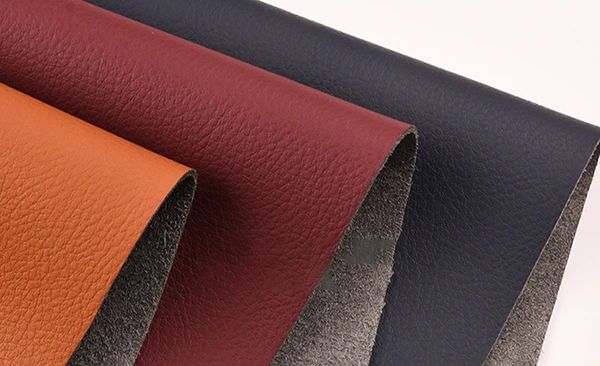
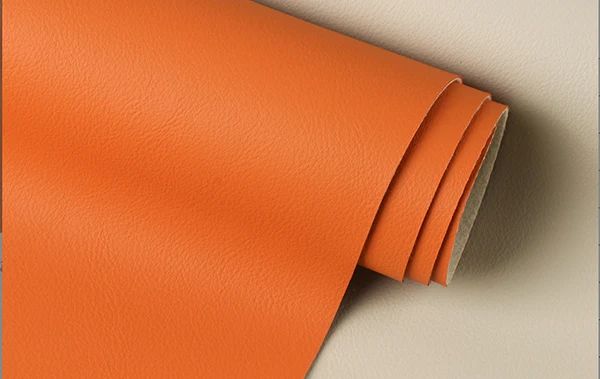
- Litchi Grain (Pebble)
- Core Appearance & Pain Point Solutions: Full and 3D granules. Thanks to the microfiber skeleton, its abrasion resistance lifespan is 3-5 times that of ordinary PU, perfectly solving the peeling pain point during high-frequency use.
- Exclusive Production Process: Hot roller deep embossing: After sealing and leveling, it is embossed with a 150-170℃ steel roller, reaching a depth of 0.3-0.6mm.
- Suitable Bag Positioning: High-frequency commuter tote bags and backpacks.
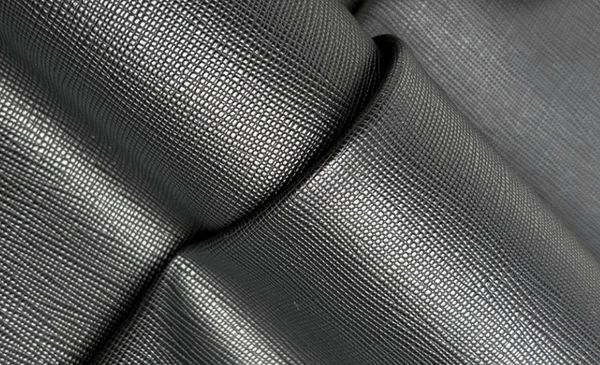
- Saffiano(Crosshatch / Cross Grain)
- Core Appearance & Pain Point Solutions: Crisscross grid with a stiff texture. The microfiber version offers excellent shape retention, avoiding the "collapsed grain" issue common in ordinary materials over time.
- Exclusive Production Process: High-precision steel mold hot pressing: After embossing at 160-180℃, a dense waxy/matte protective coating is roller-coated for long-lasting water repellency.
- Suitable Bag Positioning: High-end business briefcases and laptop tote bags.
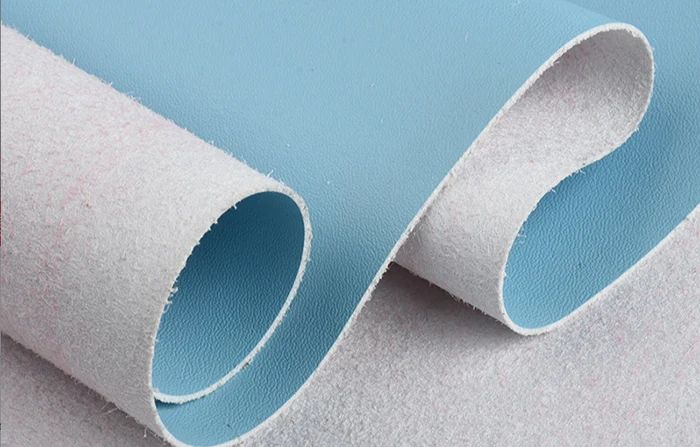
- Nappa Grain
- Core Appearance & Pain Point Solutions: Extremely shallow, flat grain surface with a delicate matte finish. The tactile feel highly replicates top-tier Nappa leather-look material.
- Exclusive Production Process: Thin-coating transfer molding: After sanding and sealing, fine release paper is used for thin-coating molding, maximizing the softness of the microfiber.
- Suitable Bag Positioning: Affordable luxury handbags focusing on minimalist elegance.
- Nubuck
- Core Appearance & Pain Point Solutions: Short velvet texture, fully matte. The velvety feel is more realistic than ordinary PU, offering overwhelming advantages in slip resistance and skin-friendliness.
- Exclusive Production Process: Physical sanding process: Directly sands through the surface PU to expose the inner microfiber heads, precisely controlling the sanding depth to adjust the velvet feel.
- Suitable Bag Positioning: Autumn/winter vintage suede tote bags and textured luxury bags.
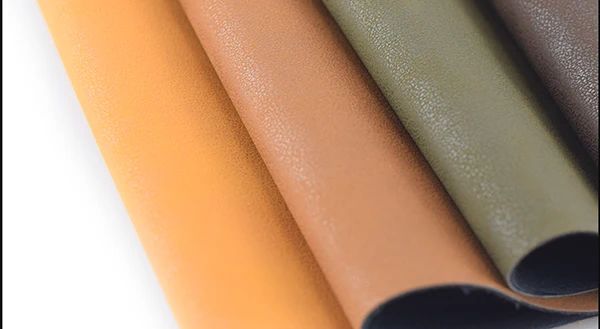
- Tumbled(Naturally Crinkled / Pebble Milled Finish)
- Core Appearance & Pain Point Solutions: Imitates natural, relaxed wrinkles. Utilizes microfiber's resilience to completely eliminate the "dead creases" prone to appear in ordinary PU.
- Exclusive Production Process: Mechanical tumbling: After softening with oils to reduce toughness, mechanical tumbling creates naturally rebounding wrinkles.
- Suitable Bag Positioning: Vintage-style tote bags emphasizing a relaxed aesthetic.
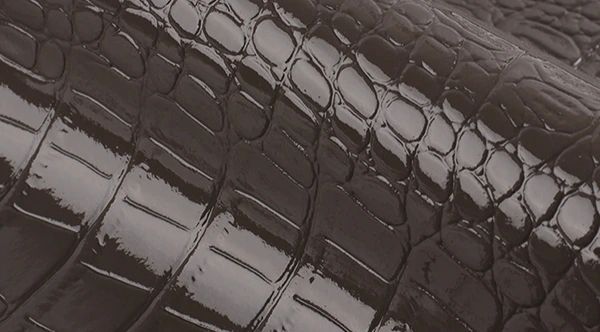
- Animal Embossed
- Core Appearance & Pain Point Solutions: 3D crocodile/ostrich scale patterns. Deep grains that do not crack or rebound.
- Exclusive Production Process: 3D deep embossing: Deeply carved under high temperature and pressure at 160-180℃, reaching depths of over 0.8mm.
- Suitable Bag Positioning: High-end evening bags and streetwear bags with strong visual impact.
II. The Highly Cost-Effective Choice: Common PU Grains and Craftsmanship Analysis
For fast-fashion brands that are more sensitive to unit prices and pursue rapid turnaround times, modern PU resin coating processes can also provide rich visual effects with a more advantageous BOM cost.
- Nappa Grain
- Core Appearance & Pain Point Solutions: Extremely shallow natural grain, soft matte finish. Dense surface, very easy to clean.
- Exclusive Production Process: Release paper transfer: Molded with fine Nappa texture release paper, combined with a thin matte PU resin coating.
- Suitable Bag Positioning: High-end fast-fashion women's bags and wallets/cardholders.
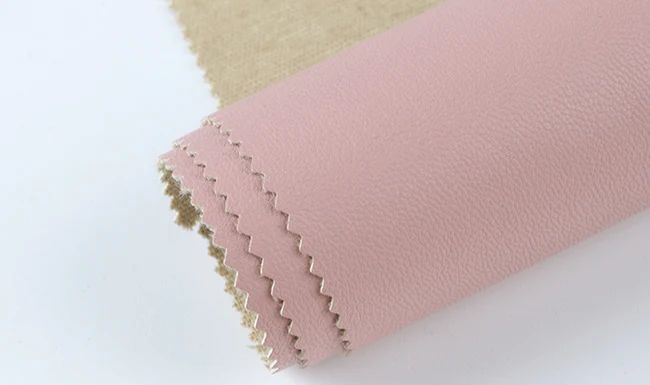
- Sheep/Calf
- Core Appearance & Pain Point Solutions: Extremely fine and light texture, evenly and brightly colored, with a light and soft feel.
- Exclusive Production Process: Shallow roller embossing/transfer: Fine carving transfer paired with thin coating ensures the leather surface lacks a heavy plastic feel.
- Suitable Bag Positioning: Fashionable soft women's bags and spring/summer trending color bags.
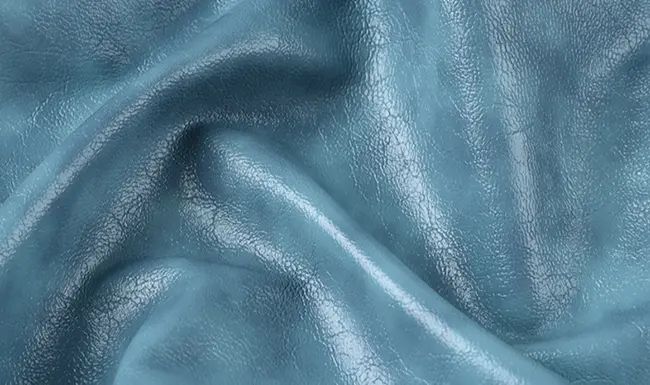
- Oil Wax Grain(Pull-Up Vintage Leather Look)
- Core Appearance & Pain Point Solutions: Naturally oily with light and dark shades; temporary creases appear when bent, offering a strong vintage atmosphere.
- Exclusive Production Process: Roller coating & tumbling: After embossing, an oily wax resin is roller-coated and mechanically tumbled, partially layered with rub-off vintage coloring.
- Suitable Bag Positioning: Vintage-style tote bags and motorcycle-style bags.
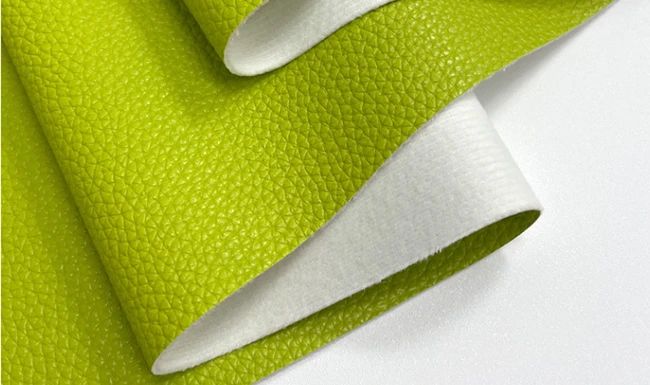
- Pebble Grain (Litchi)
- Core Appearance & Pain Point Solutions: Full, irregular granular feel. The most widely used, versatile, and scratch-resistant.
- Exclusive Production Process: Release paper transfer/post-roller: Release paper coating lamination and curing; mature process allows for rapid style changes.
- Suitable Bag Positioning: The top choice for mass casual handbags and maternity tote bags.
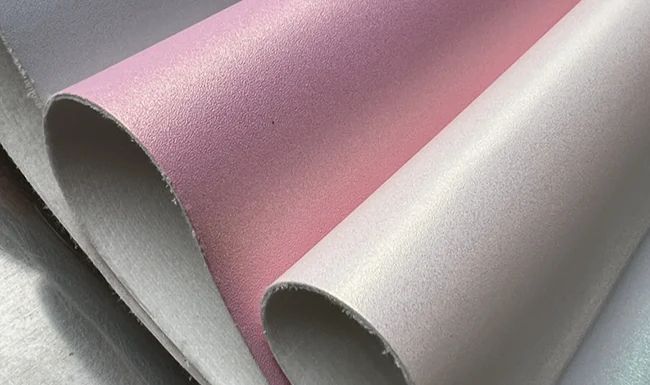
- Frosted/Matte
- Core Appearance & Pain Point Solutions: Matte finish with a subtle grainy feel, absolutely non-reflective, and naturally fingerprint-resistant.
- Exclusive Production Process: Chemical/Physical matting: Silicon dioxide matting agents added to PU resin, or transferred using frosted release paper.
- Suitable Bag Positioning: Low-key textured business casual bags and men's tote bags.
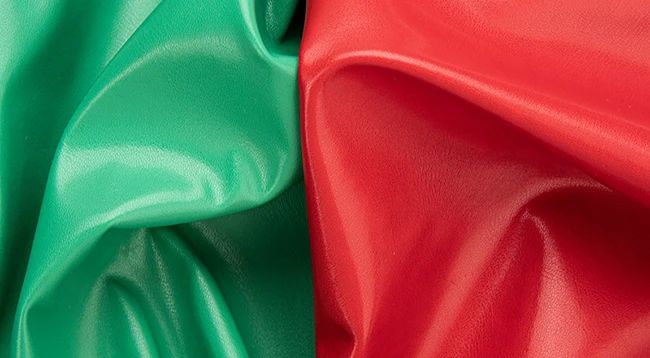
- Patent PU
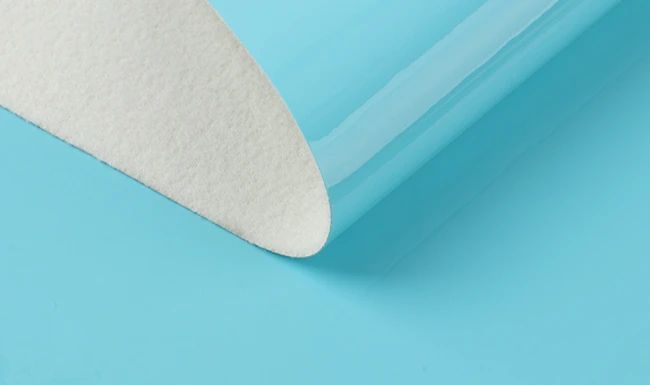
- Core Appearance & Pain Point Solutions: Highly glossy with extreme color saturation, presenting a mirror-like effect similar to patent leather.
- Exclusive Production Process: Multi-layer precision coating: High-transparency PU resin multi-layer precision coating and rigorous polishing treatments.
- Suitable Bag Positioning: Party decorative bags and visually striking evening clutch bags.
- Woven
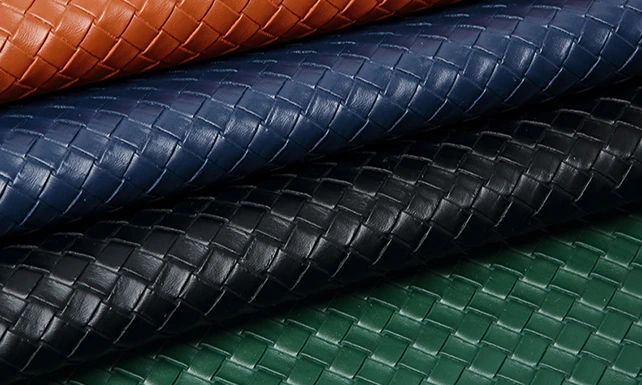
- Core Appearance & Pain Point Solutions: Imitates the textured warp and weft of fabrics, perfectly avoiding the breaking and scratching flaws of real straw weaving.
- Exclusive Production Process: Precision rolling/transfer: Pressed with molds featuring high-precision woven textures.
- Suitable Bag Positioning: Summer straw-style vacation tote bags and beach bags.
III. The Soul That Determines a Bag's Lifespan: Hardware and Zipper Systems
1. Zipper Criticality There is a consensus among buyers: once a zipper bursts or jams, the entire bag is declared completely ruined. This directly affects a brand's return rate. Japan's YKK is undoubtedly the global quality benchmark, providing ultimate smoothness and bite lifespan. If the procurement budget is limited, never settle for unbranded, inferior zippers. Top Chinese brands like SBS and SAB are excellent alternatives; their smoothness and tensile strength fully match YKK, making them the designated zipper suppliers for many top international fast-fashion brands, significantly optimizing BOM costs.
2. Hardware Materials & Plating Defense
- Material Hierarchy: Solid Brass is the standard for luxury goods—highly tough, rust-proof, and weighty, but expensive. Zinc Alloy is the "gold standard" for mid-to-high-end mass production, ideal for die-casting complex shapes with excellent cost-effectiveness. You must never accept iron hardware for exposed parts, as it rusts easily.
- Surface Treatment: You must specify Rack Plating to ensure that the surfaces of hooks and buckles are as smooth as a mirror. Barrel Plating, which easily causes micro-scratches, must be strictly avoided.
IV. The Invisible Quality Barrier: Base Reinforcement and Stitching Matrix
Whether a tote bag will quickly deform during use depends on the factory's internal structural design and the professionalism of its stitching matrix.
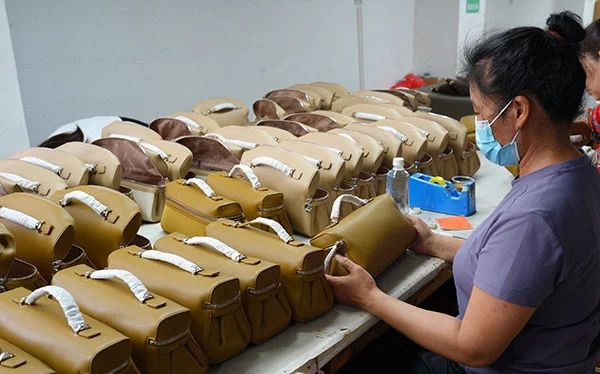
- Internal Structural Engineering: The crispness of a tote bag comes from the EVA, Salpa (leather board), or non-woven fabric hidden beneath the leather. For load-bearing needs, the bottom must be precisely prepped and fitted with a high-density bottom board to prevent the bag base from sagging severely after loading a laptop.
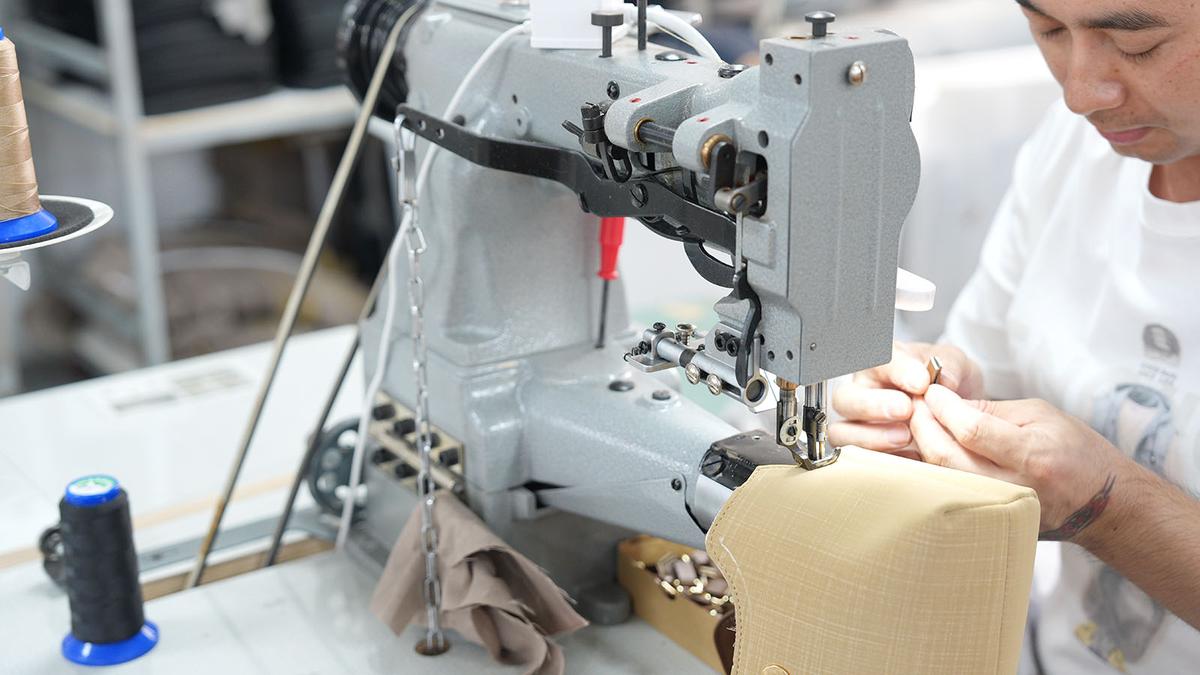
- Flatbed & Cylinder Bed Sewing: The industry standard for main body stitching is 7 stitches per inch (7 SPI). The three-dimensional binding at the bottom heavily tests the craftsman's spatial control and must be completed by highly experienced workers using a cylinder bed machine to ensure the edges are round and undistorted.
- Computer Pattern Sewing: Modern high-end manufacturing has achieved 100% digitization for localized stitching. In high-risk stress areas like the handle roots, dense Z-shaped or zigzag bartacking is automatically completed via computer programs, entirely eliminating human error in tension. For brand logo appliques and irregular geometric stitches, custom molds are used to achieve ±0.1 mm absolute symmetry.
V. Full-Link QC System: The Defense Line Sourcing Managers Should Care About Most
The core competitiveness of a premium manufacturer lies in having a rigorous quality control system that is not merely a formality.
- IQC (Incoming Quality Control): This is not just checking if the leather color and grain match the PP (Pre-Production) Sample; it requires verifying specifications down to every single accessory. For example, the diameter of the cotton cord inside the handle must be exact—too large will cause the stitching to burst, while too small will leave the handle feeling flat and wrinkled. Simultaneous tests include fabric tensile testing, wet/dry rubbing tests for dark leathers, and 48-72 hour salt spray tests for hardware.
- IPQC (In-Process Quality Control): Inspectors on the assembly line do far more than just look for missed stitches. Core checks include: ensuring Logo embossing and hardware installation are absolutely straight without glue overflow; verifying high-risk stitching is perfectly straight; and checking if the leather surface shows abnormal wrinkles or bulging after lamination and sewing. All hidden dangers must be eliminated at the semi-finished stage.
- FQC & Testing (Final Quality Control): Before mass production is boxed, a proportion of finished products must undergo a bag load-bearing Jerk Test—loaded with 5-10 kg of weight and violently pulled up and down hundreds of times on a shaking machine. Only when handles do not break and the bag body does not deform is it qualified to leave the factory.
Buyer FAQs
Q: Why do tote bags often collapse and lose their shape at the bottom after prolonged use?
A: This typically happens when manufacturers cut corners on BOM costs by not adding a high-density bottom board of sufficient thickness, or if the EVA composite shaping material inside the main body lacks sufficient weight. When customizing, you must clearly specify the hardness and thickness parameters of the bottom board in your Tech Pack.
Q: Our brand wants to focus on "eco-friendly vegan" concepts. Besides ordinary PU, what other materials look premium?
A: We strongly recommend Microfiber leather. Although its BOM cost is higher than ordinary PU, its micro-fiber skeleton gives it overwhelming advantages in abrasion resistance, tear strength, and lifespan. Specifically, Microfiber Nappa and Nubuck grains feel almost identical to top-tier calfskin or suede.
Q: Do you accept small-batch custom development for new brands? What is the Minimum Order Quantity (MOQ)?
A: For standard color PU or microfiber materials, our regular MOQ is 100 pieces per style. If you require custom-dyed leathers, custom brand logo molds, or exclusive hardware tooling, the MOQ will increase to 500-1000 pieces to cover the supply chain startup costs.
If you are looking for a manufacturing partner for your next tote bag collection who understands craftsmanship, prioritizes quality control, and can solve practical pain points—whether you need a specialized vegan leather factory or a versatile canvas tote bag manufacturer—please submit your design requirements via the form on the right. We will provide you with a complete solution from BOM optimization to sample landing.