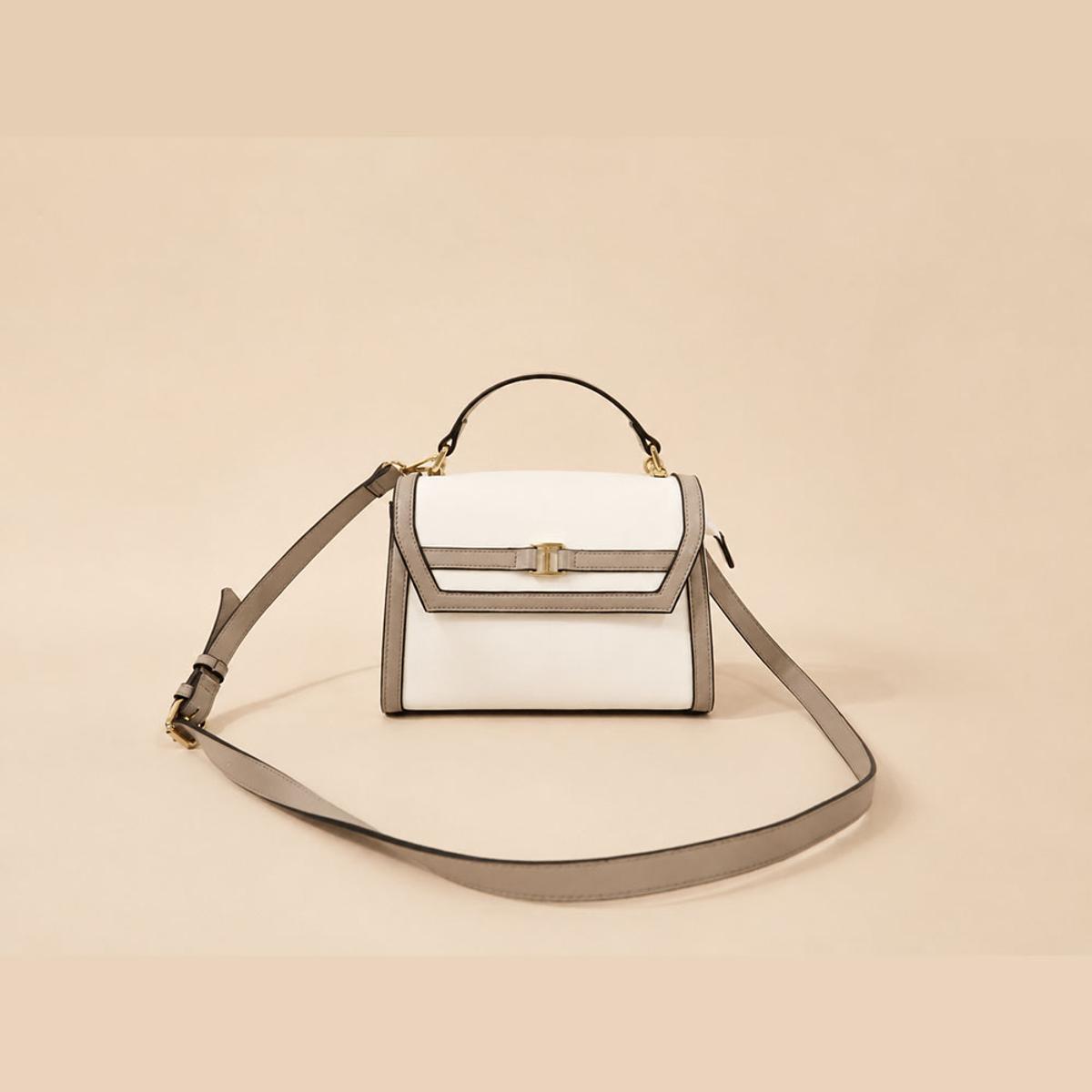
What Belongs in a Handbag Tech Pack, and Why It Decides Your Final Cost
When quotes for the same bag come back far apart, the cause is usually the brief rather than the factory. A missing lining specification, an unstated edge finish or an undefined hardware grade all leave room for interpretation, and every interpretation carries a different price. The tech pack is what closes that gap.
The drawing
- Front, back, side and top views at a stated scale.
- Overall dimensions (width, height, depth) and where each measurement is taken: top edge, widest point, base.
- Handle drop, strap length and width, and whether the strap is adjustable or fixed.
- A panel breakdown, so the factory can see how the body is constructed instead of inferring it from the outside.
Materials
List every component separately: body, trim, binding, lining, interlining, piping, feet and edge finish.
For each one, give the material type, the thickness or weight (millimetres for leather, GSM or ounces for fabric), the finish (smooth, pebbled, suede, coated) and a reference: a swatch, a sample bag, or a named article from a supplier. "Genuine leather, brown" is not a specification; it is the start of a conversation that will happen after the quote.
Hardware
- Type and size of each piece: zipper, puller, rings, buckles, feet, magnetic snap, turn-lock.
- Finish and plating colour, with an approved physical sample as the reference.
- Grade, plus any restrictions your market imposes, such as lead-free or nickel-release limits.
Hardware is one of the most common sources of a mid-project cost change, because substitutions look alike in a photograph and behave differently after a year in use.
Construction
- Edge treatment: painted, folded, raw or bound.
- Stitch length in stitches per inch, and the thread type and colour.
- How the lining is attached, and what interlining or reinforcement sits behind the panels.
- Zipper type and length, pocket layout, and any internal structure.
A construction note such as "rigid base with board reinforcement" costs a line to write and can move a price further than any negotiation.
Branding and colourways
- Logo technique and size: deboss, foil, embroidery, metal plate or woven label.
- Placement coordinates for each logo and label, plus care and origin labels.
- A colour standard for every component, with a Pantone reference and a physical swatch. Two mills read the same Pantone differently, and the swatch is what settles a question at inspection.
- The light source used for colour comparison, with D65 the usual choice.
Packaging, labelling and compliance
- Hangtags, barcode or UPC placement, polybag and carton specifications, master carton quantity and shipping marks.
- Destination market requirements: REACH, California Proposition 65, CPSIA for children's items, azo dyes, phthalates, nickel release.
- Whether laboratory testing or a pre-shipment inspection is required, and who arranges it.
What to send if you do not have a tech pack yet
Plenty of brands start with a reference bag and a photo set rather than a full specification, and that is workable. We can build the spec sheet with you, propose materials at two or three price points, and let the sample decide. The sample fee is credited back against the bulk order, so specification work is not a sunk cost.
What helps most in the first exchange: the reference bag or photos, the target quantity per colour, the price band you are working to, and the date you need the goods. With those four, we can normally come back within a day or two with an initial view on whether the bag is achievable at the target, and where the cost sits.